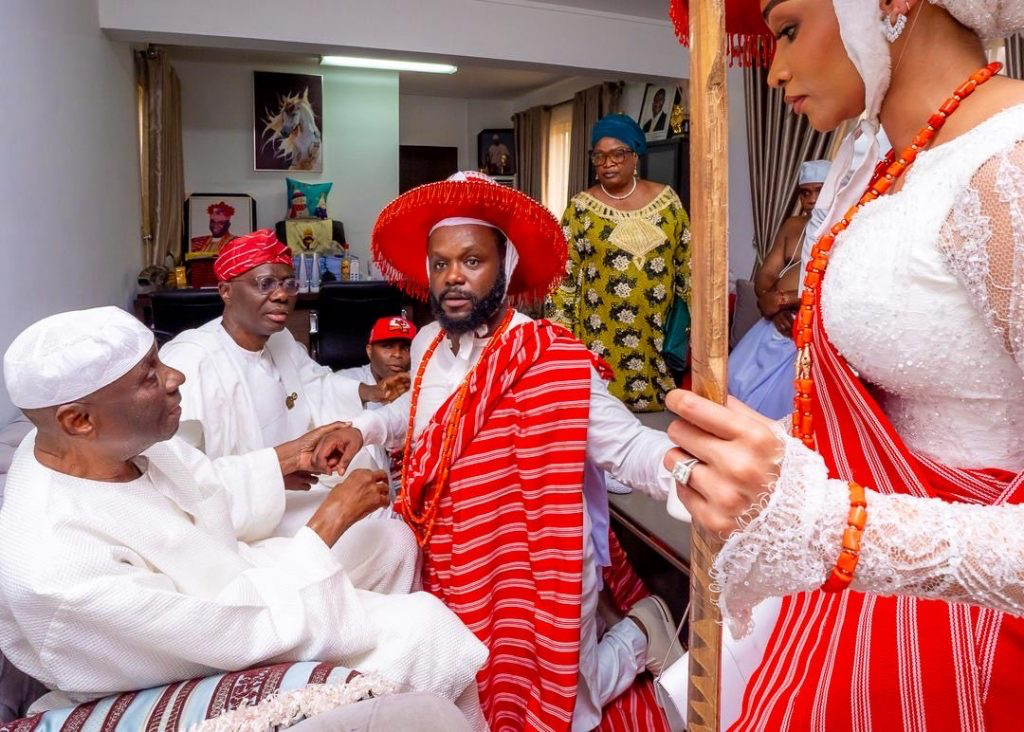
Son of Nigerian President Bola Tinubu, Oluwaseyi Tinunu has been installed as the Okanlòmo of Eyọ Ọba Alakẹtẹ Pupa, Laba Ẹkun, a prestigious chieftaincy title tied to the historic Eyo masquerades of Lagos. The ceremony which was held on Friday, December 26, came just days after he was similarly installed as the Okanlomo of Yorubaland by the Alaafin of Oyo, Oba Abimbola Owoade, on December 21, marking a rapid ascent within cultural hierarchies.
The Eyo Festival, where white-robed masquerades called Adimu Orisha glide through Lagos Island in elaborate processions, celebrates ancestral reverence and civic renewal. As Okanlomo, meaning “beloved son of the land” — Seyi Tinubu now holds a ceremonial role that bridges modern Lagos’s political elite and its deep Yoruba heritage.
Lagos State Governor Babajide Sanwo-Olu commended the appointment, citing Tinubu’s “youthful leadership and cultural commitment” during the installation at the Oba’s Palace.
 Tinubu’s dual Okanlomo titles for Yorubaland and for the Eyo Oba Alakete Pupa lineage highlight his expanding symbolic presence in southwestern Nigeria’s traditional ranks. His earlier recognition by the Alaafin of Oyo positioned him as a cultural unifier, while the Lagos title ties him directly to the ancient Eyo institution, often celebrated as the spiritual heart of the city.
Analysts see the timing of these honors as both a nod to heritage and a reflection of the Tinubu family’s growing cultural-political influence.
During the Lagos ceremony, Seyi Tinubu arrived with his wife, joined by drummers, chiefs, and Red Cap Eya custodians, in a spectacle that merged pageantry and digital-age visibility through viral social media clips.
Ahead of the festival’s return after an eight-year break, Governor Sanwo-Olu also unveiled a new 40-foot Eyo Monument at the John Randle Centre for Yoruba Culture and History. The move underscores an effort to rebrand the festival as both a cultural marker and a tourism asset for Lagos. Traffic diversions across Lagos Island will support the masquerade processions, set to fill the streets with chants, palm fronds, and the sound of *aja* rattles when celebrations begin on December 27.